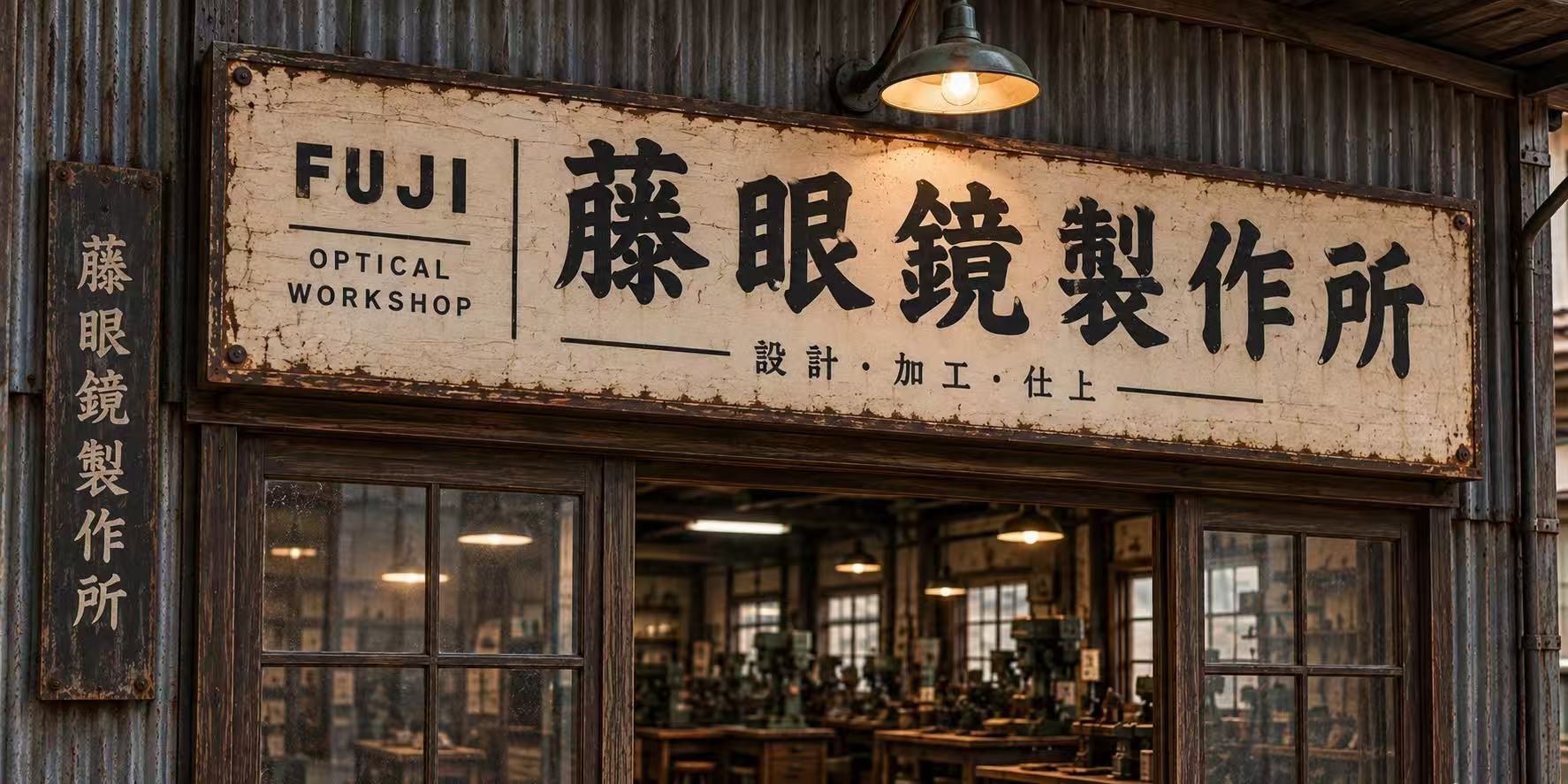
Japan has a unique position in the global eyewear industry.
For international eyewear brands, designers and entrepreneurs looking for premium manufacturing, Japan is often associated with precision, craftsmanship, titanium processing and carefully controlled production.
But finding the right eyewear manufacturer in Japan is not always easy.
Unlike manufacturing regions where a single large factory may perform nearly every process in-house, Japanese eyewear production — particularly in Sabae, Fukui — has historically developed around networks of specialized manufacturers and craftsmen.
Different companies may specialize in different processes, materials or technologies.
For an international brand, the real challenge is therefore not simply:
“Can I find an eyewear factory in Japan?”
The more important question is:
“Which Japanese manufacturing route is right for my product?”
This guide explains what international brands should consider before starting an eyewear project in Japan.
Why Sabae Is Important in Japanese Eyewear Manufacturing
Sabae, located in Fukui Prefecture, is one of Japan's best-known eyewear manufacturing regions.
Over generations, the region developed a highly specialized manufacturing ecosystem involving frame makers, component manufacturers, polishing specialists, plating companies, tooling specialists and other companies supporting eyewear production.
Today, Sabae is particularly recognized for premium metal and titanium eyewear.
Its manufacturing culture combines specialized industrial processes with the detailed hand-finishing traditionally associated with Japanese craftsmanship.
For overseas brands seeking Japanese eyewear production, Sabae is therefore often one of the first regions to consider.
However, choosing a manufacturer should still depend on the product itself.
A lightweight titanium optical frame requires a very different production route from a thick acetate fashion frame or an injection-molded sports frame.
Start With the Product — Not the Factory
One of the most common mistakes when sourcing eyewear is choosing a factory before clearly defining the product.
Instead, start with questions such as:
What material will the frame use?
Is the product optical eyewear or sunglasses?
Is the design primarily fashion-oriented, technical or performance-oriented?
Does the frame require custom hinges or other mechanical components?
Is the project a prototype, a small production run or a larger commercial order?
Is Made in Japan production essential?
Does the brand already have CAD data or technical drawings?
Or is the project starting from a sketch, reference sample or concept?
These questions determine which manufacturing route makes sense.
At Sabae Optical, we prefer to review the product concept first and then identify the appropriate development and manufacturing process.
Choosing the Right Eyewear Material
Titanium Eyewear
Titanium is strongly associated with premium Japanese eyewear manufacturing.
It is lightweight, corrosion-resistant and well suited to refined optical frames.
However, titanium eyewear production requires specialized knowledge and equipment.
Depending on the design, production may involve multiple specialists responsible for forming, machining, brazing or joining, surface treatment, polishing and final assembly.
For brands looking for lightweight premium optical frames with a strong Japanese manufacturing story, titanium is often an important option.
Acetate Eyewear
Acetate provides very different design possibilities.
It allows designers to explore:
frame thickness
sculpted surfaces
transparent colors
layered colors
patterns
custom silhouettes
polished finishes
A typical acetate project may involve CNC machining, drilling, hinge installation, core-wire processes, tumbling, polishing, assembly and adjustment.
Acetate is particularly suitable for fashion brands and independent eyewear labels seeking strong visual identity.
Japan also has its own history of acetate materials and frame manufacturing.
Combination Frames
Some projects combine acetate with titanium or other metal components.
Combination eyewear can create a distinctive premium appearance, but it also increases engineering complexity.
The designer must consider how the different materials connect, how tolerances are controlled and how the frame behaves during assembly and adjustment.
This is an area where selecting the correct combination of specialists becomes particularly important.
Injection-Molded Eyewear
Injection molding can be appropriate for sports eyewear, lightweight frames, technical products and projects requiring different production economics.
However, injection projects require careful consideration of:
mold design
material selection
tooling investment
shrinkage
structural design
hinge construction
production volume
For a new brand, it is important to evaluate these factors before investing in tooling.
A prototype or engineering review can often identify potential problems before the mold is produced.
Metal Eyewear
Not every metal eyewear project needs to follow the same route.
Frame construction, material, surface treatment, rim design, bridge construction and temple design can significantly change manufacturing requirements.
This is why sending only a reference photograph and asking:
“How much does this frame cost?”
often does not provide enough information for an accurate manufacturing evaluation.
OEM, ODM or Custom Development?
International buyers often use the terms OEM and ODM differently.
For practical purposes, eyewear projects can usually be divided into several categories.
Existing Frame / Private Label
An existing design is selected and customized with elements such as:
logo
lens
color
temple printing
case
packaging
This is generally the simplest route.
Semi-Custom Eyewear
An existing platform or construction is modified.
Changes may include:
frame shape
temple design
color
hardware
lenses
branding
This can reduce development cost compared with a completely new frame.
Full Custom Eyewear
A completely new product is developed from:
sketches
drawings
CAD files
physical reference samples
industrial design concepts
This route normally requires technical development and prototyping before production.
What Should You Send to a Japanese Eyewear Manufacturer?
The more information available at the beginning, the more accurately a project can be evaluated.
Useful materials include:
Design sketches
2D technical drawings
3D CAD data
Reference photographs
Physical samples
Target dimensions
Preferred materials
Color references
Lens requirements
Logo position
Packaging requirements
Estimated quantity
Target market
Target retail price
Not every project needs all of these.
A concept-stage brand may begin with only a sketch and reference images.
An established eyewear company may already have complete CAD data.
Both are possible, but the development process will be different.
Can You Start With Only a Physical Sample?
Yes.
In some projects, a physical reference sample can be used as the starting point for technical evaluation.
The sample may help us understand:
construction
dimensions
hinge mechanism
material
fit
assembly method
However, reproducing or modifying an existing product may require additional design and engineering work.
Intellectual property should also be considered when working from third-party products.
For original products, providing CAD data or drawings whenever available can make technical evaluation more efficient.
Prototype Before Production
For a completely new frame, moving directly into production is not always the best approach.
A prototype can help evaluate:
Shape
Size
Fit
Temple geometry
Bridge position
Hinge construction
Material thickness
Mechanical function
Overall appearance
Changes are generally easier to make during development than after production tooling or manufacturing preparation has been completed.
For technically unusual eyewear — especially frames involving new hinge mechanisms or mixed materials — prototyping becomes even more important.
What About MOQ?
There is no single MOQ for all Japanese eyewear manufacturing.
MOQ depends on factors including:
material
construction
tooling
components
color
production process
supplier
packaging
degree of customization
A simple private-label project and a completely custom titanium frame should not be expected to have the same MOQ.
For this reason, Sabae Optical reviews MOQ on a project-by-project basis rather than presenting one number for every type of eyewear.
How Much Does It Cost to Manufacture Eyewear in Japan?
Again, there is no meaningful universal price.
A frame's cost can be influenced by:
Material
Number of components
Frame construction
Surface treatment
Hardware
Lens specification
Polishing requirements
Tooling
Order quantity
Packaging
Level of hand finishing
For custom projects, development costs and production costs should also be considered separately.
A low unit price does not necessarily mean a lower total project cost if expensive tooling or high minimum quantities are required.
The correct comparison should therefore consider the complete project.
Japan or China — Which Is Better for Your Eyewear Project?
There is no universal answer.
Japan and China both have significant eyewear manufacturing capabilities, but they can serve different project requirements.
Japan may be particularly attractive when a project prioritizes:
Made in Japan positioning
Japanese craftsmanship
premium titanium construction
specialized manufacturing
detailed finishing
small or specialized production
a Japanese manufacturing story
China may offer advantages for other projects involving:
larger production volumes
extensive component supply chains
certain injection-molding projects
cost-sensitive products
rapid industrial scaling
The correct production country should be determined by the product and brand strategy rather than by a simple assumption that one country is always better than another.
In some cases, development and manufacturing strategies may involve different specialists or locations while maintaining clear control over origin claims and production responsibilities.
Why Working With a Japan-Based Partner Can Help
For an overseas brand, sourcing in Japan can involve more than finding a factory.
Projects may require communication between:
designers
engineers
frame manufacturers
component suppliers
material suppliers
polishing specialists
surface-treatment companies
lens suppliers
packaging suppliers
Language, technical terminology and production expectations can also create misunderstandings.
A Japan-based project partner can help organize this process and communicate requirements between the international customer and the relevant manufacturing specialists.
How Sabae Optical Approaches a New Project
Sabae Optical begins by understanding the product.
We review:
1. Design
What is the brand trying to create?
2. Material
Titanium, metal, acetate, injection or combination?
3. Construction
How should the frame actually be manufactured?
4. Development
Does the project require CAD work, engineering or prototyping?
5. Production Route
Which manufacturing resources are appropriate?
6. Quantity
Prototype, small batch or production order?
7. Finishing
Color, plating, polishing, lenses and branding.
8. Final Product
Assembly, quality requirements, packaging and delivery.
Rather than forcing every project into one factory or one manufacturing method, the objective is to identify a production route appropriate for the product.
From an Idea to Japanese Eyewear
You do not necessarily need to understand the Japanese eyewear industry before contacting us.
You may already have:
a finished CAD design
or simply:
a sketch and an idea.
Both can be starting points.
The important thing is to define what you want the product to become.
From there, we can evaluate the design, materials, development requirements and possible manufacturing route in Japan.
Start Your Eyewear Project in Japan
If you are developing a new optical frame or sunglasses collection and are considering manufacturing in Japan, send us the information currently available.
This may include:
sketches
CAD files
drawings
photographs
reference samples
materials
estimated quantities
target price range
We can then review the project and discuss the appropriate next step.
SABAE OPTICAL
Your Gateway to Eyewear Manufacturing in Japan.
FAQ
Where are Japanese eyeglass frames manufactured?
Sabae in Fukui Prefecture is one of Japan's best-known eyewear manufacturing regions. The area has developed a network of specialized companies involved in frame manufacturing, components, polishing, surface treatment and related processes.
Does Japan manufacture titanium eyeglasses?
Yes. Titanium eyewear is one of the product categories strongly associated with Japanese and Sabae eyewear manufacturing.
Can a foreign company manufacture eyewear in Japan?
Yes. International brands can work with Japanese manufacturers and production partners. The appropriate route depends on design, material, quantity and project requirements.
Can I manufacture a small quantity of eyewear in Japan?
Some projects can be produced in relatively small quantities, but MOQ depends on the material, construction, components and manufacturer. It should be evaluated individually.
Can I develop an eyewear prototype in Japan?
Yes. Depending on the project, prototypes can be developed from CAD data, drawings, sketches or physical reference samples.
Can Sabae Optical manufacture acetate eyewear?
Sabae Optical can evaluate acetate eyewear projects and identify an appropriate development and manufacturing route based on the design, quantity and required specifications.
Can Sabae Optical help with titanium eyewear?
Yes. Titanium and metal eyewear projects can be reviewed according to their construction, design requirements and required manufacturing processes.
Do I need CAD files before contacting you?
No. CAD data is helpful but not always required at the initial stage. Projects can also begin from sketches, reference images, drawings or physical samples.
How do I get a quotation?
Send available project information including design, material, quantity, dimensions and any reference files or samples. After reviewing the requirements, the appropriate development and production route can be discussed.